01
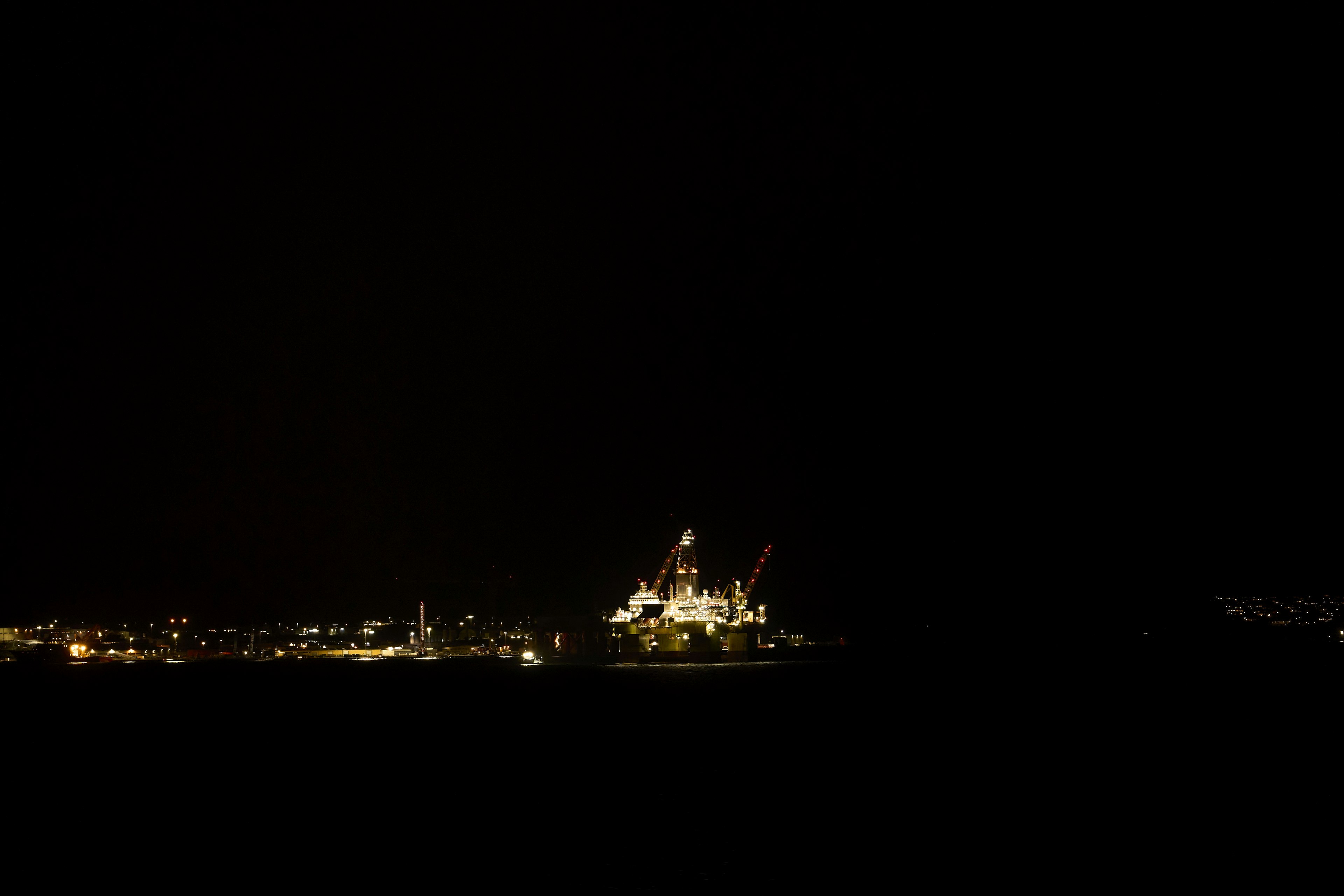
AI's insatiable load
Hyperscale training clusters are outrunning grid interconnection queues. They need baseload power and relentless cooling — not intermittent renewables.
Tri-Regional Ocean Infrastructure Blueprint
TROIB harnesses the thermal, chemical, and physical energy of the deep sea across three U.S. maritime zones — turning a 20 °C temperature gradient into baseload power, AI cooling, freshwater, and critical minerals. Zero emissions. Four revenue streams. One blueprint.
America's grid is being asked to power an AI buildout, cool it, and quench a deepening water crisis — all at once. The deep ocean is the only resource that answers every demand simultaneously.
Hyperscale training clusters are outrunning grid interconnection queues. They need baseload power and relentless cooling — not intermittent renewables.
The Sun Belt is drying. Traditional desalination is energy-hungry and dumps toxic brine. Coastal cities need scalable, low-energy freshwater.
Carbon mandates demand 24/7 zero-emission power. Solar and wind can't deliver firm capacity. The grid needs a round-the-clock clean engine.
The deep sea sits at a constant 4 °C. The surface bakes at 24 °C+. That 20-degree gradient is a perpetual, planet-scale battery. TROIB converts it into electricity, cooling, water, and minerals — at once.
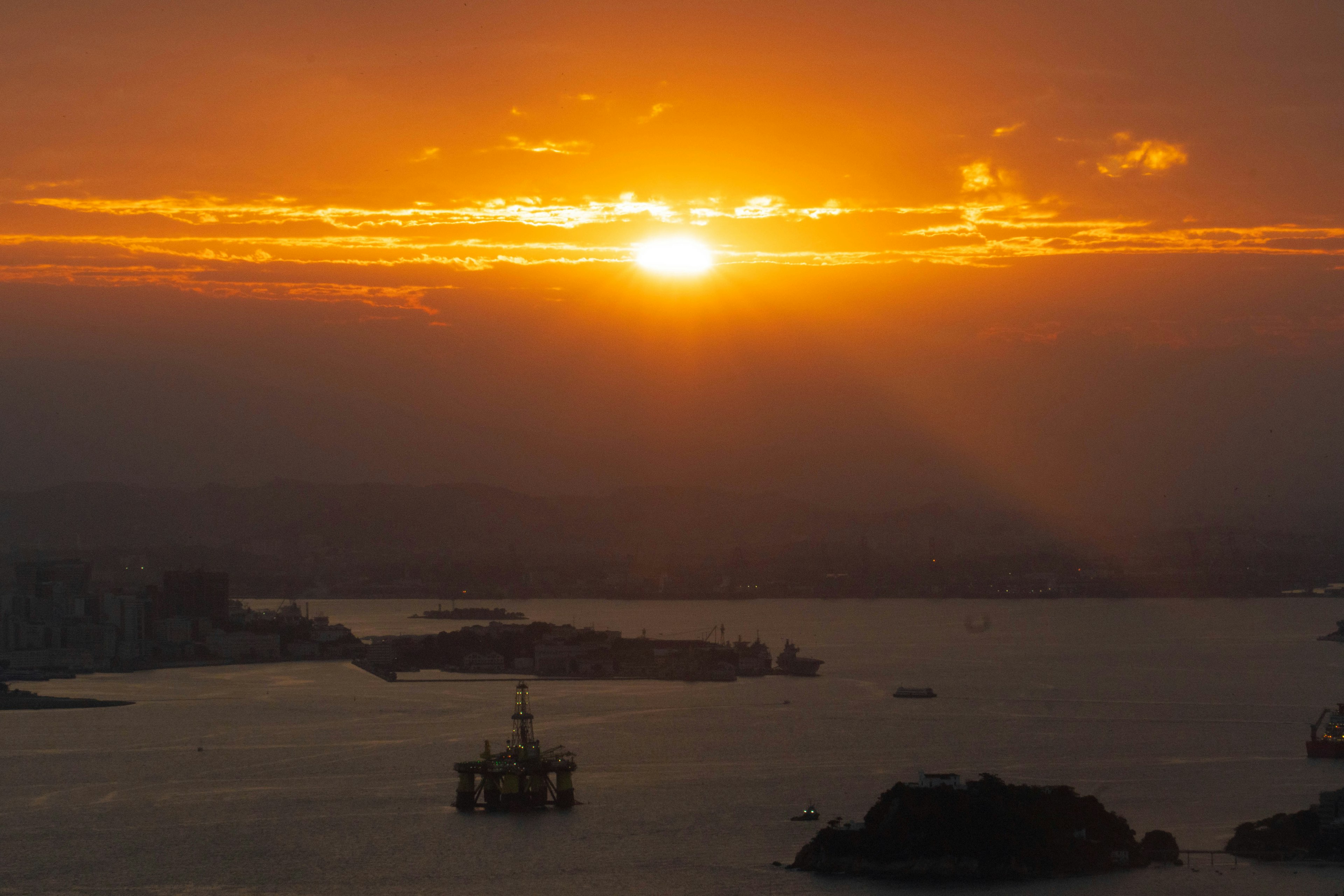
A planet-scale battery
The surface soaks up solar heat; the abyss stays near freezing. TROIB stands in that gap and converts it — continuously, with zero fuel.
TROIB deploys Ocean Thermal Energy Conversion (OTEC), Deep Sea Water Utilization (DSWU), and vacuum-flash desalination — each region tuned to its own oceanography.
3,000 ft cold-water pipes draw 4 °C abyssal water to the surface.
Mississippi Canyon & Alaminos Canyon — Spar & Tension-Leg Platforms
We intercept late-life and decommissioned deepwater rigs slated for multi-million-dollar removal, then retrofit their hollow moonpools to house 3,000-ft vertical composite cold-water pipes. Closed-cycle ammonia OTEC blocks generate continuous baseload power.
Instead of wheeling power to shore, ruggedized liquid-cooled AI training modules sit directly on the rig decks. 4 °C deep-sea water delivers direct-to-chip immersion cooling; excess power becomes transportable green hydrogen and ammonia.
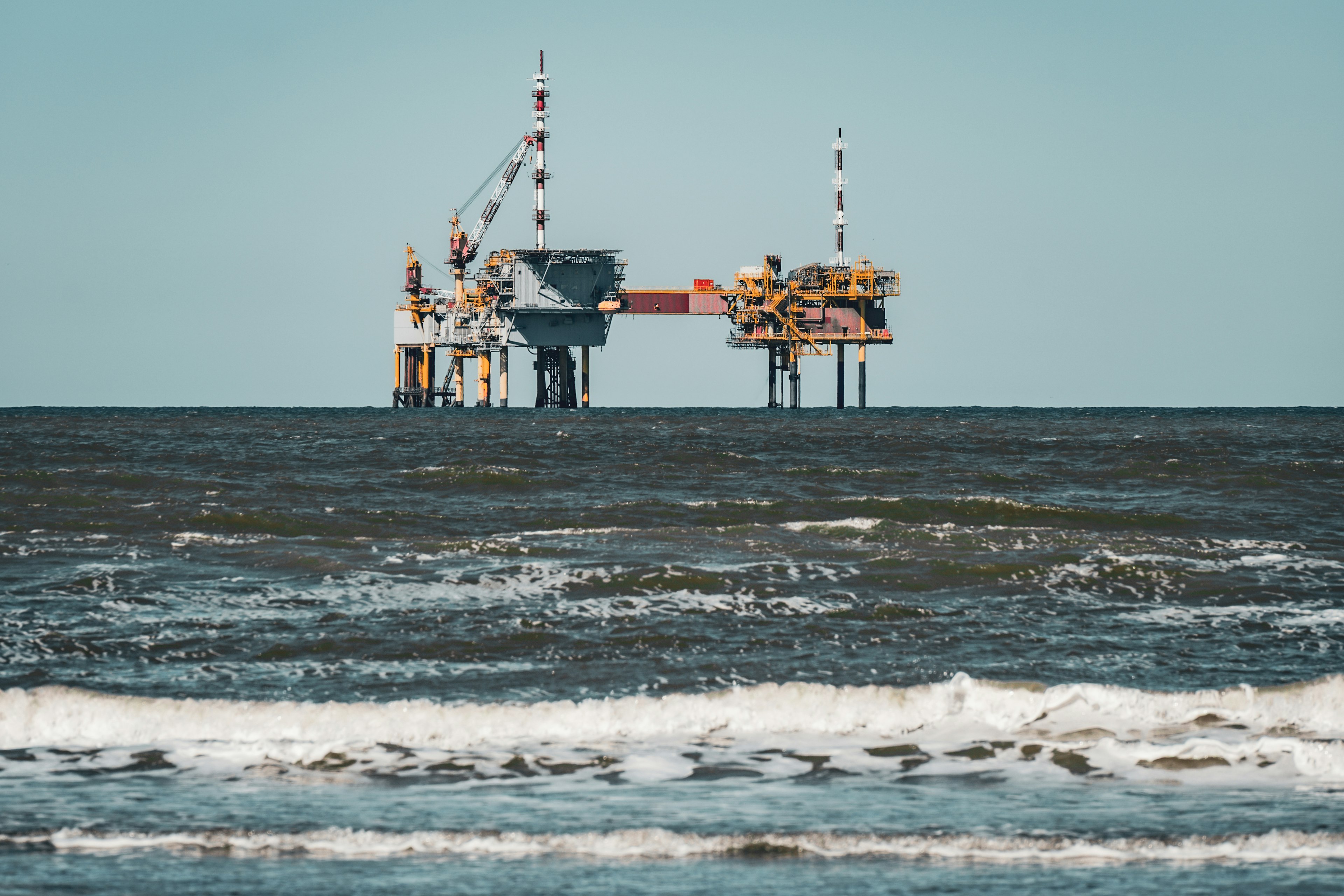 Gulf of Mexico · deepwater platform
Miami · Fort Lauderdale · Florida Keys — tapping the Gulf Stream
Commercial multi-megawatt floating OTEC plantships moor 3–5 miles offshore, tapping the powerful thermal gradient of the Gulf Stream. High-voltage subsea cables inject baseload electricity directly into the Florida Power & Light grid.
Post-turbine cold water (7–10 °C) feeds a mainland Sea Water Air Conditioning (SWAC) district loop through downtown Miami's carrier hotels, edge data centers, and high-rises — retiring electricity-hogging mechanical chillers entirely.
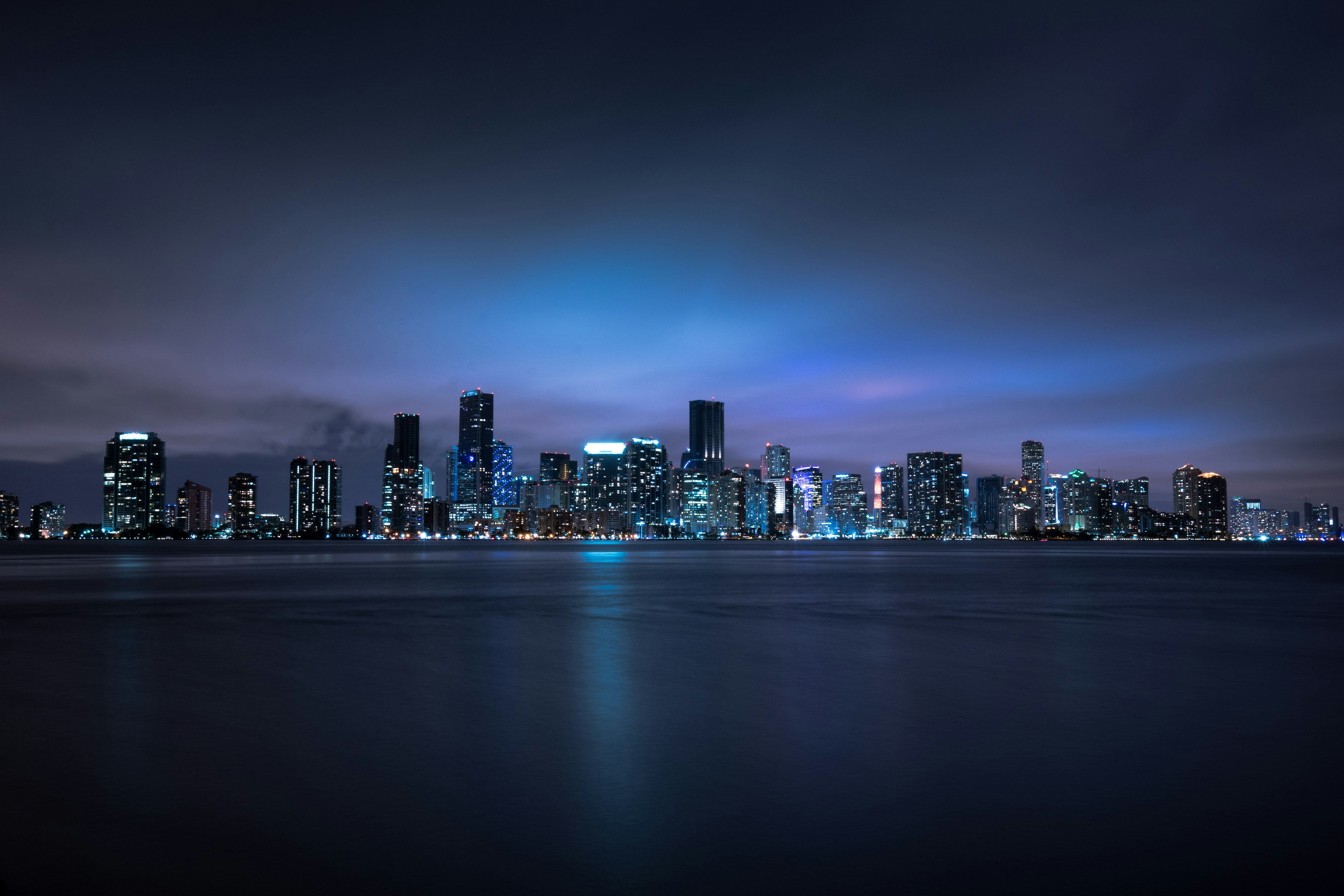 Miami · downtown SWAC district
La Jolla & Redondo Canyons — a fractional, non-power OTEC asset
Shore-based DSWU facilities sit beside deep submarine canyons. Lacking the surface temperature for electricity generation, this region runs as a pure-utility asset: high-volume intake pipelines pull 4 °C water for two value streams.
Vacuum-flash desalination boils seawater at ambient temperature inside low-pressure chambers — a fraction of the energy of reverse osmosis. Chilled closed loops cool agricultural soil for heatwave-proof crops and feed pathogen-free mariculture grids.
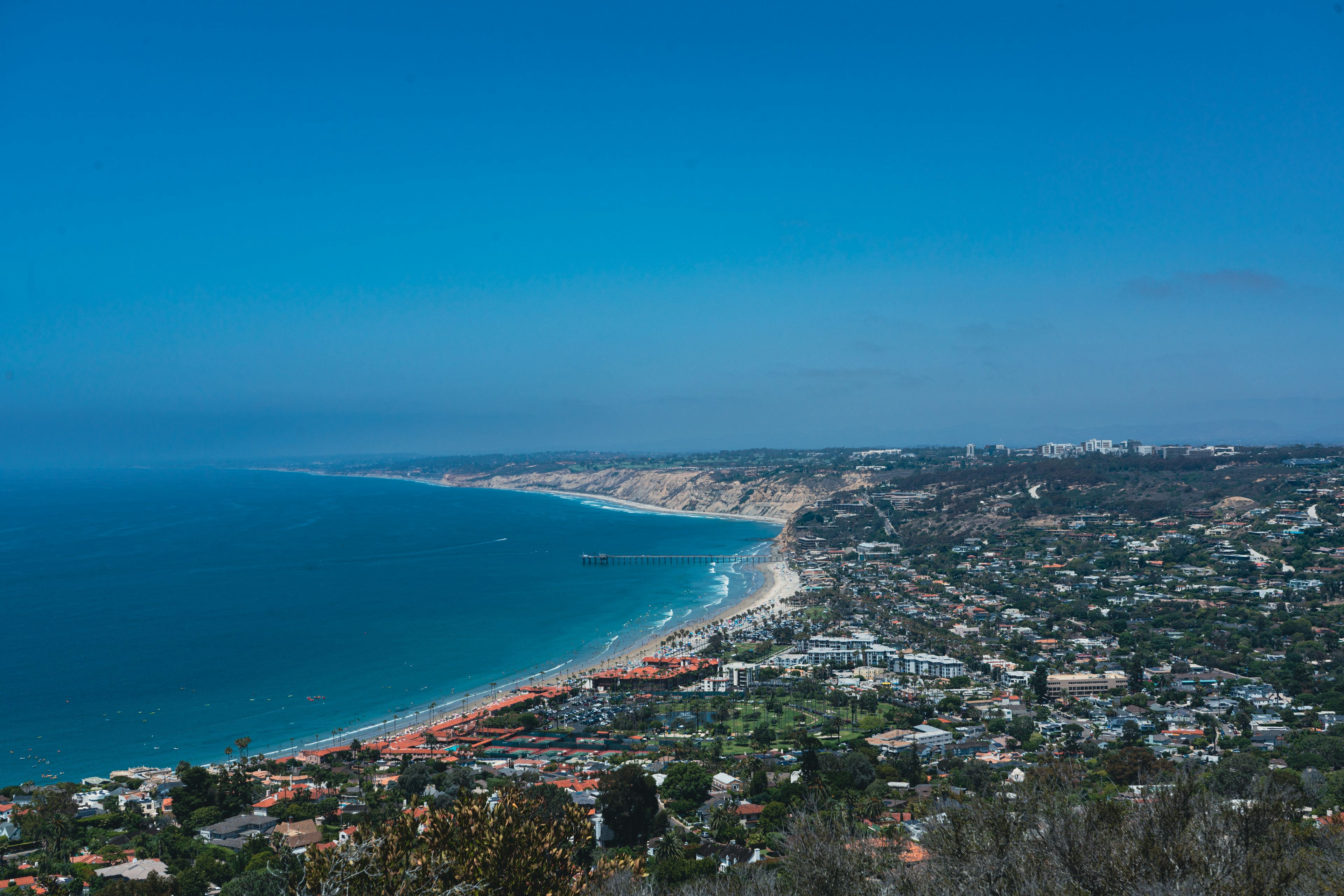 La Jolla · submarine canyon coast
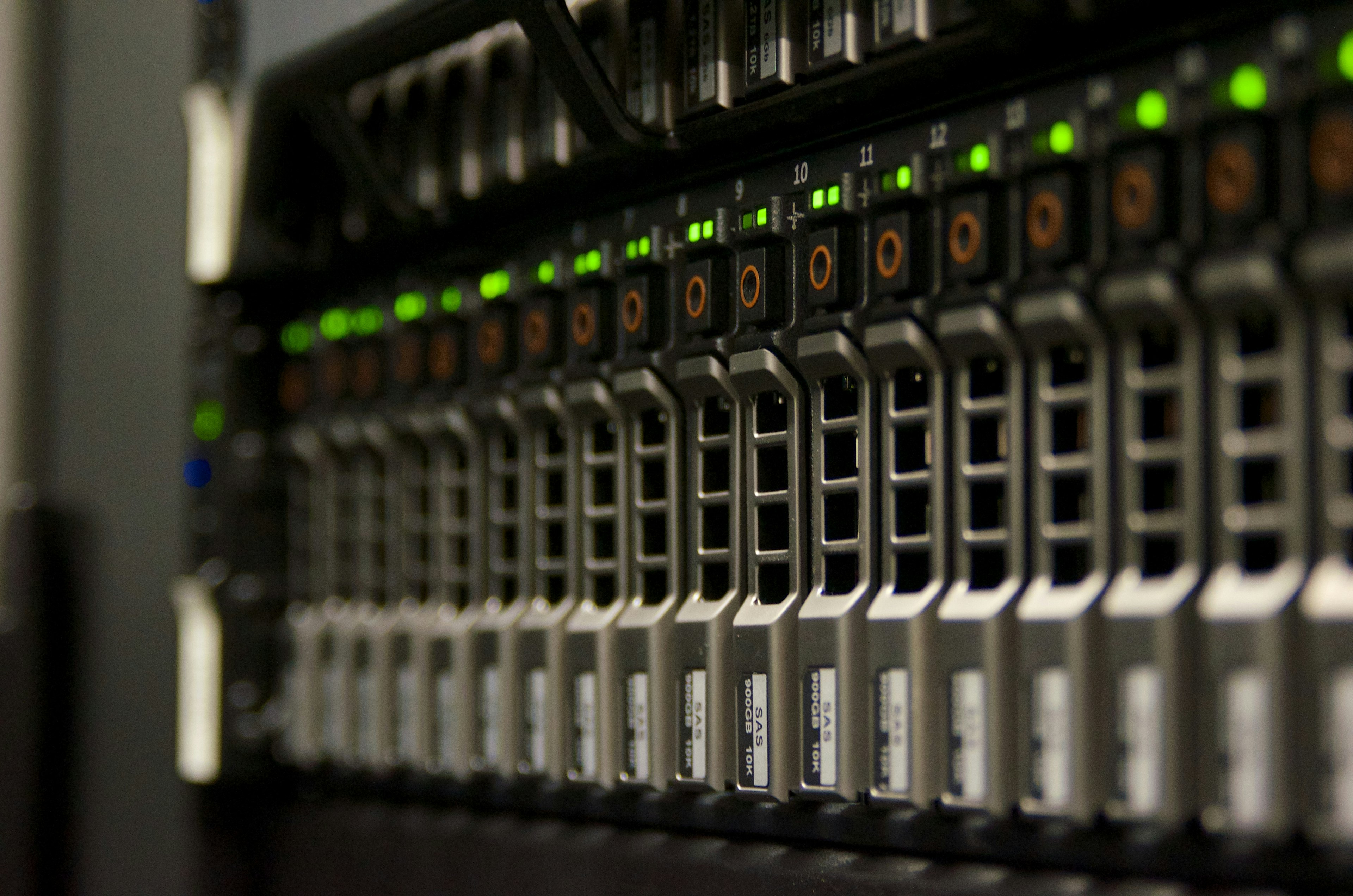
The intelligence age runs hot
Direct-to-chip immersion cooling fed by deep-sea water drives data-center Power Usage Effectiveness to 1.02–1.05 — and the power is 100% zero-emission.
A closed ammonia cycle exploits the warm-surface / cold-deep gradient to spin turbines — firm, 24/7, zero-emission baseload that solar and wind cannot match.
Cold, nutrient-dense, pathogen-free abyssal water becomes a feedstock for cooling, desalination, aquaculture, and chilled-soil agriculture.
Low-pressure chambers boil seawater at ambient temperature, producing potable water at a fraction of reverse-osmosis energy — no high-pressure membranes.
Fractional crystallization evaporates brine completely — eliminating toxic dumping and converting waste into high-value mineral commodities.
Process schematics for each core subsystem — the closed-cycle power loop, the rig retrofit, the urban cooling district, and the zero-discharge mineral train.
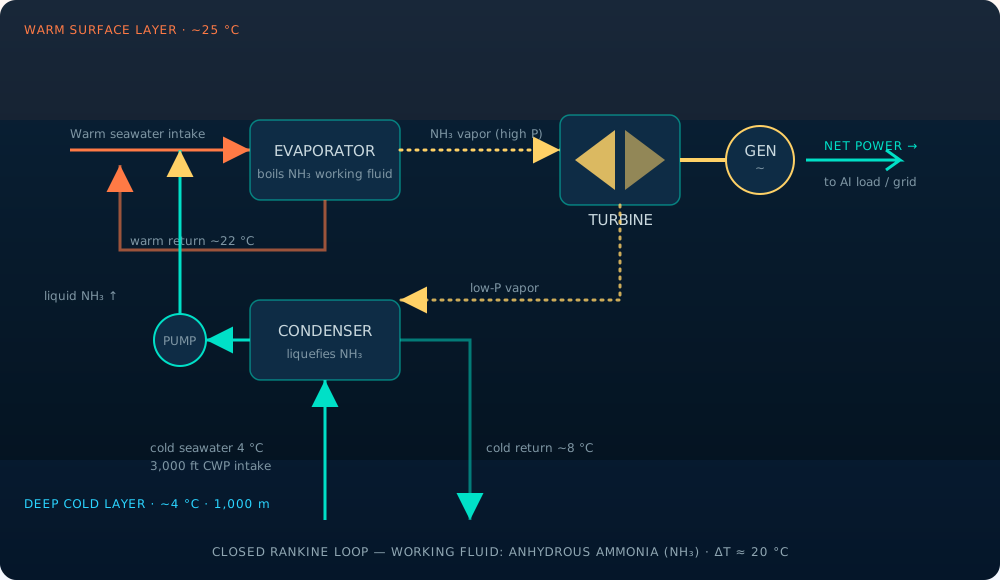
Warm surface water boils anhydrous ammonia to spin a turbine; 4 °C deep water condenses it — a continuous Rankine loop across a 20 °C gradient.
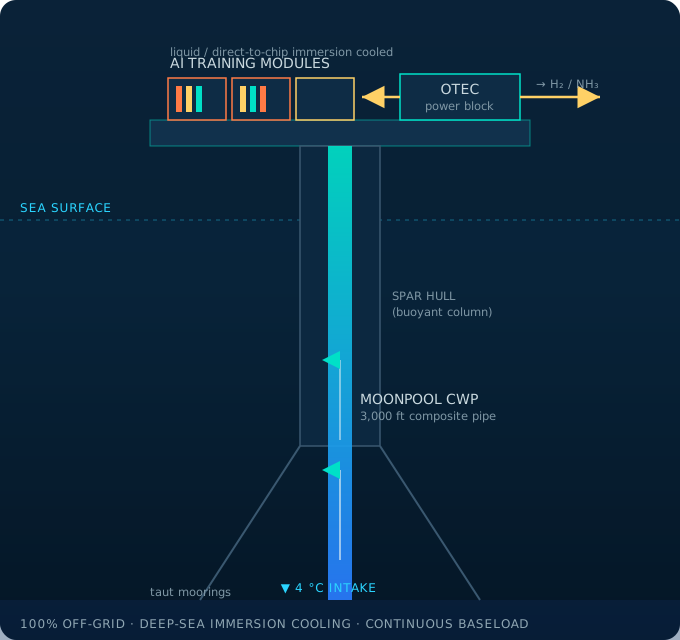
The moonpool houses a 3,000-ft cold-water pipe; OTEC powers deck-mounted, immersion-cooled AI modules off-grid, exporting green hydrogen and ammonia.
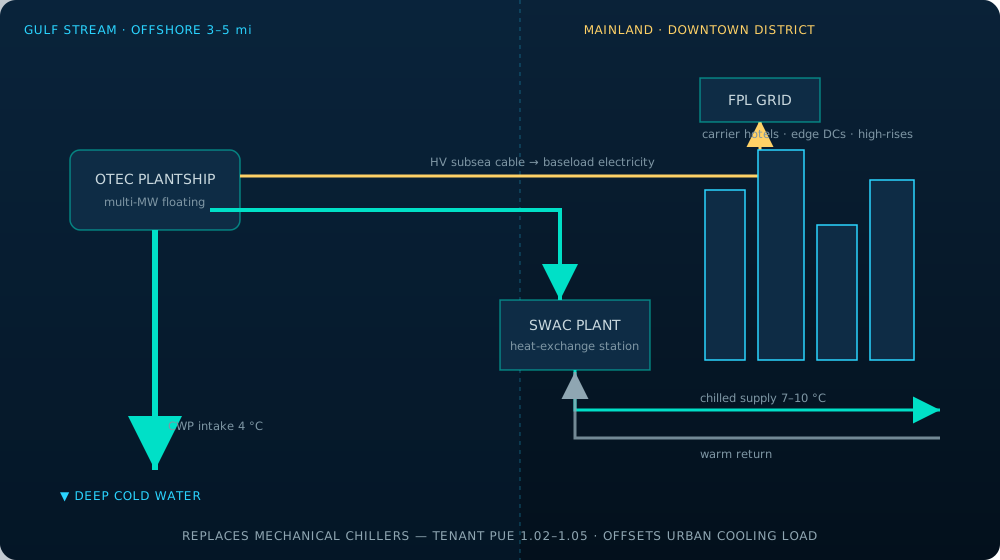
A floating plantship injects baseload power to the grid and pipes cold water ashore to cool downtown carrier hotels, edge data centers, and high-rises.
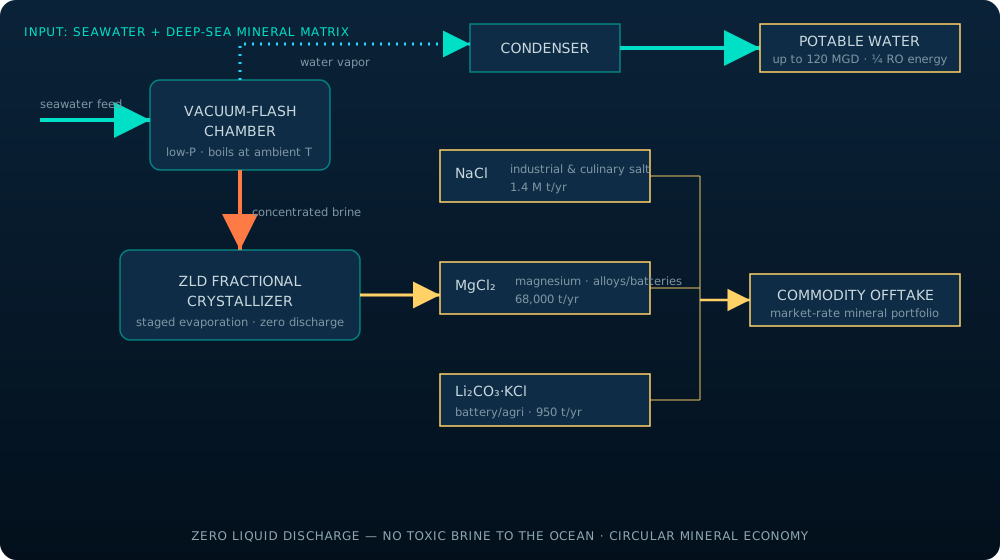
Low-pressure flash chambers make potable water at a fraction of RO energy; the brine is crystallized into salt, magnesium, and battery minerals — zero discharge.
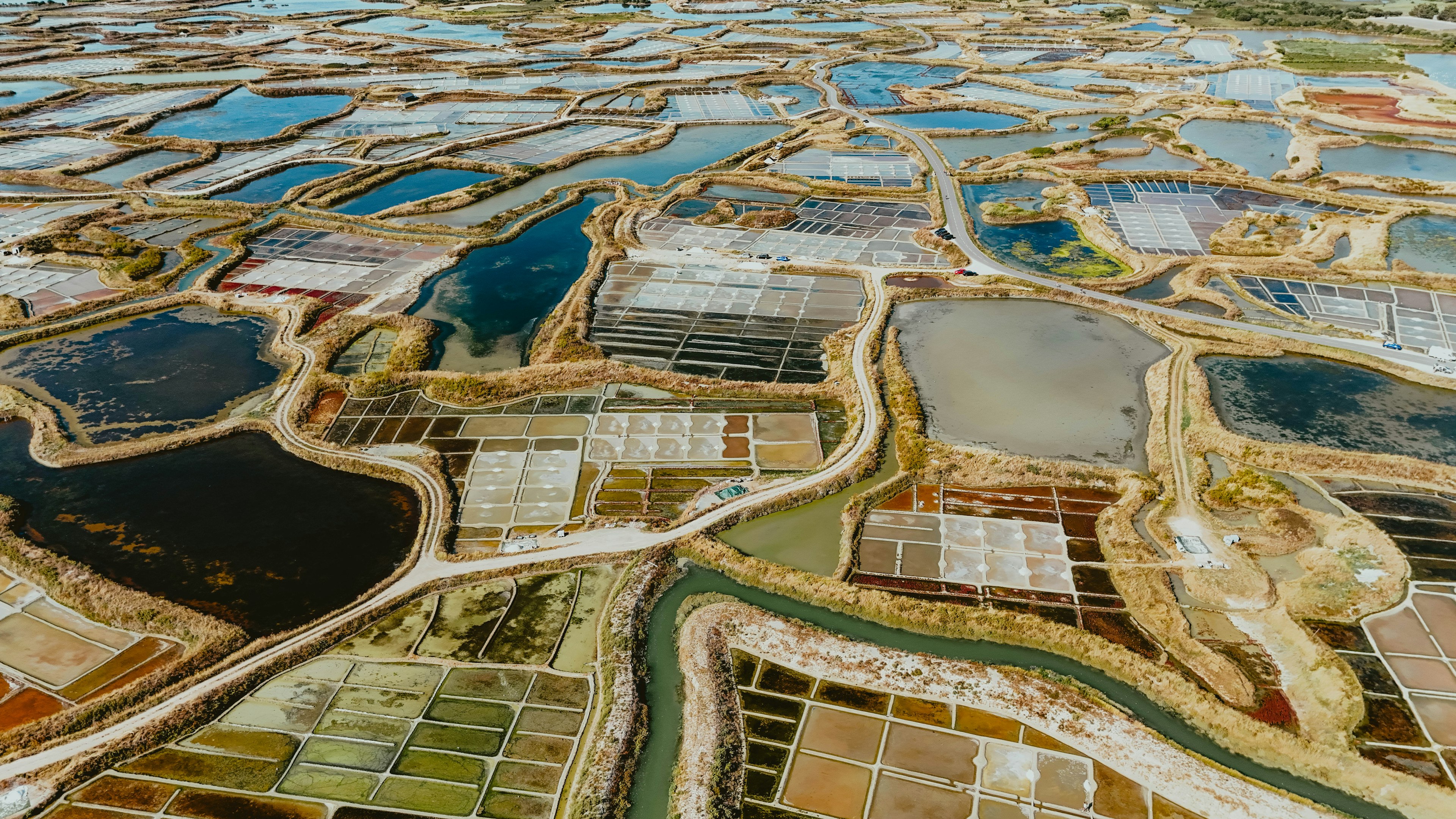
Zero liquid discharge
Fractional crystallization turns waste brine into salt, magnesium, lithium and potassium — eliminating toxic discharge and opening a fourth revenue stream.
Traditional desalination kills marine life with hyper-saline discharge. TROIB's Zero Liquid Discharge process evaporates brine entirely, segmenting it into industrial-grade commodities.
Pure sodium chloride for water softening, chemical processes, and premium gourmet markets.
Lightweight automotive & aerospace alloys and next-generation battery chemistries.
Battery-grade lithium carbonate and agricultural-grade potassium from the mineral matrix.
Year 1–3 pilot (1 Gulf rig · 1 Florida plantship · 1 California facility) → Year 4–7 scale (5 · 3 · 2) → Year 10 full commercial maturity.
Diversification across data centers, grid power, water, minerals, and green fuel drastically lowers investor risk versus single-utility infrastructure. All figures in USD millions.
| Revenue Stream | Yr 3 | Yr 7 | Yr 10 |
|---|---|---|---|
| Data Center Infrastructure (power & cooling lease) | $42.0 | $210.0 | $588.0 |
| Grid Electricity (PPA ~$0.07/kWh) | $43.0 | $172.0 | $306.0 |
| Municipal Water ($1,200/acre-foot) | $20.2 | $80.8 | $161.6 |
| Mineral & Salt Commodities | $18.5 | $74.0 | $155.0 |
| Green Fuel (H₂ / ammonia) | $12.0 | $60.0 | $144.0 |
| Total Gross Revenue | $135.7 | $596.8 | $1,354.6 |
| Estimated OPEX | ($45.0) | ($165.0) | ($310.0) |
| Projected Net EBITDA | $90.7 | $431.8 | $1,044.6 |
Acquiring decommissioned rigs via the federal Rigs-to-Reefs framework circumvents up to 40% of the open-ocean anchoring and structural costs rivals must absorb.
Zero Liquid Discharge sidesteps the multi-year environmental litigation that traps conventional desalination over toxic brine — clearing the permitting path.
Hyperscalers on our rigs or SWAC loops hit a Power Usage Effectiveness of 1.02–1.05 — the premier destination for carbon-neutral, water-positive mandates.
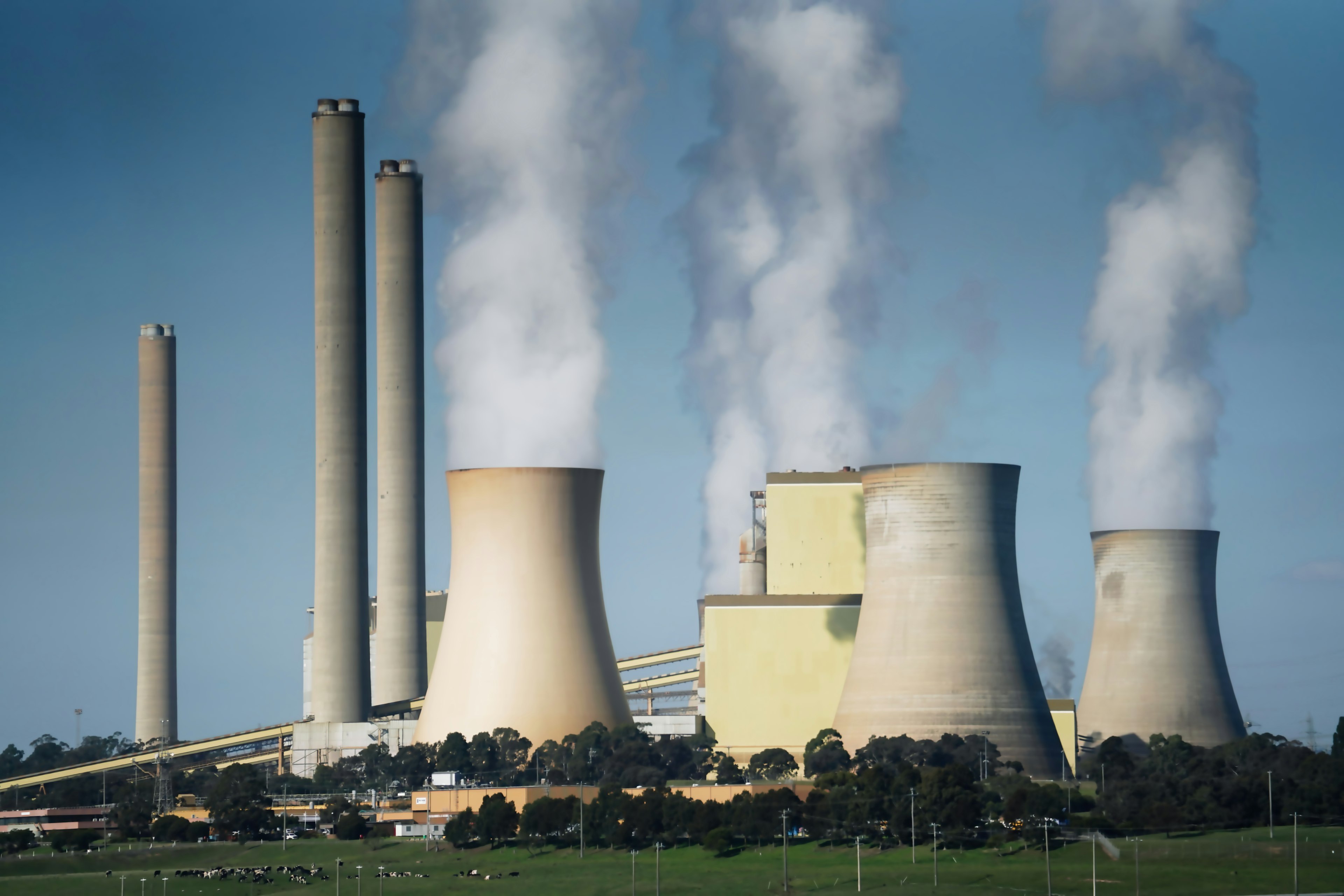
The tailpipe didn’t disappear — it just moved. Across much of America’s grid, the power charging that battery is dialed straight out of a coal- and gas-fired power plant hundreds of miles away. The smoke is real. It’s just billowing somewhere you’ll never see it, behind a marketing sticker that says “clean.”
TROIB doesn’t relocate the smokestack. It eliminates it — electricity born from the ocean’s own heat. Nothing burned. Nothing mined. Nothing emitted.
True Green Energy · Powered by the Sea
U.S. grid generation mix varies by region and season; fossil fuels — coal and natural gas — still supply a large share of the electricity that charges grid-tied electric vehicles.
Conceptual engineering briefs detailing the thermodynamics, system architecture, and process design behind each TROIB subsystem. Open on screen or print to PDF.
Carnot limits, the ammonia Rankine cycle, parasitic cold-water pumping, and gross-vs-net power across the rollout.
Spar/TLP moonpool retrofits, direct-to-chip seawater immersion cooling, PUE 1.02–1.05, and the Rigs-to-Reefs CapEx edge.
Gulf-Stream plantships, subsea grid injection, and a mainland district loop that retires mechanical chillers.
Vacuum-flash desalination, staged crystallization by solubility, and the salt / magnesium / battery-mineral portfolio.
The opportunity is the size of the ocean
We're assembling capital, hyperscale offtake partners, and coastal development allies for the pilot phase. If you're building the future of AI, water, or clean energy — let's talk.
invest@troip.xyz · partners@troip.xyz · troip.xyz